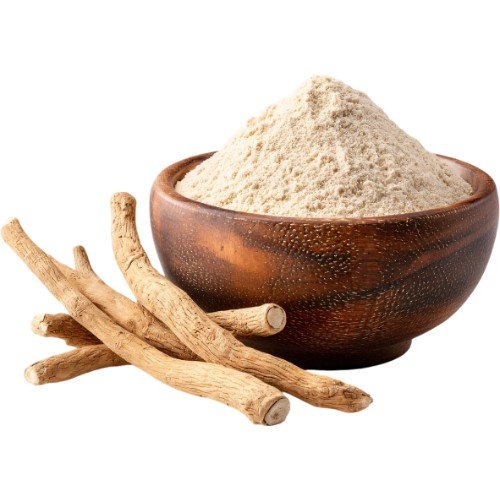
Ashwagandha is sold in many grades, and the name on the label tells you very little. The useful questions are which plant part it is, what is being measured, and how it is measured. Get those three right and choosing a grade becomes a straightforward business decision.
Start with the plant part
Ashwagandha (Withania somnifera) can be supplied as root, leaf or a blend of the two. The plant part matters because the chemistry, the traditional use and the regulatory position are all different. We supply root only. India's food regulator issued an advisory in April 2026 that limits food use to the root and root extract, and as a result many buyers now ask for the plant part to be written on the certificate of analysis. If a quotation or a COA does not state it, ask before you order. It is a one-line question that can save a rejected batch later.
The common grades, explained
Ashwagandha is traded in four broad forms. The percentages below are typical commercial grades and vary between manufacturers, so always confirm the exact figure and the test method for the lot you are buying.
| Form | What it is | Typical use |
|---|---|---|
| Root powder | Dried, milled root with no standardisation | Traditional blends, capsules and tablets that carry a whole-herb label |
| Extract, lower withanolides | Standardised extract at a lower marker level | Cost-sensitive capsules, powders and blends |
| Extract, mid withanolides | Standardised extract at a mid marker level | The most common choice for capsules and tablets |
| Extract, higher withanolides | Concentrated, standardised extract | Smaller capsules, gummies and premium formulas |
Root powder is the simplest and the least expensive per kilogram, but because it is not concentrated you need more of it to reach the same amount of marker compounds. A standardised extract costs more per kilogram but delivers a known, repeatable level of withanolides in every batch. That consistency is what most brands are really paying for.
Understand what "withanolides" means on the label
Withanolides are the group of compounds used as the marker for ashwagandha. A percentage on its own can mean different things. Some suppliers report total withanolides, while others report only specific individual compounds. The two can give quite different numbers for the same material. When you compare quotations, ask each supplier exactly which compounds are counted in the percentage, and make sure you are comparing like with like.
Match the grade to the product format
The right grade depends heavily on what you are making.
- Capsules and tablets: a mid or higher grade keeps the fill weight low, which matters because tablet and capsule size is limited. A larger dose of a low-strength extract can simply be too big to swallow comfortably.
- Powders and drink mixes: check solubility, colour and taste. Ashwagandha has a distinct earthy flavour and some extracts are noticeably bitter or tend to clump. Request a sample and test it in your actual formula before committing.
- Gummies: look for a fine, free-flowing powder that disperses well in the mix and stays stable through cooking and drying.
- Blends and traditional formulas: root powder is often the better fit when the label is meant to read as a whole herb rather than a standardised extract.
Ask how it was tested
The assay method changes the number. For supplement-grade ashwagandha extract, most buyers and regulators expect the withanolide figure to be measured by HPLC, which separates and measures the individual compounds. Other methods can read higher because they pick up related compounds as well. Put the method in your specification, for example "withanolides by HPLC", so there is no argument later.
Alongside the assay, ask for heavy metals, pesticide residue and microbiology reports. Roots can carry more heavy metals than leaves because they sit in the soil, so the contaminant panel is not a formality for this ingredient. Our guides on reading a COA and on safety testing for botanicals explain what to look for.
Check the source and the paperwork
Ask where the root was grown, whether it is cultivated or wild-collected, and whether the manufacturer holds the certifications your market expects, such as FSSAI, GMP, ISO 22000, organic, Kosher or Halal. Which certificates apply depends on the manufacturer and the product, so tell your supplier your target market early. We quote from a source that holds the certificates you need and supply copies on request.
Order a sample before a full lot
Our minimum order is 5 kg. For a new product the sensible path is a sample or a small first lot. Run it through your own laboratory, test it in your formulation, check taste, flow and solubility, and only then scale up. A good supplier will expect this and will not push you into a large first order.
A simple decision checklist
- Confirm the plant part is root, and that this is written on the COA.
- Decide the format: capsule, tablet, powder, gummy or blend.
- Choose the grade that gives the dose you want in the size you can fit.
- Name the test method and the compounds counted in your specification.
- Request the contaminant reports and the certificates for your market.
- Test a sample on your own line before you place a bulk order.
You can see the full specification range on our Ashwagandha product page, or request a quote with your target grade, quantity and destination market. We reply within 24 hours.